

 Español
 Русский
Food Exports from Morocco
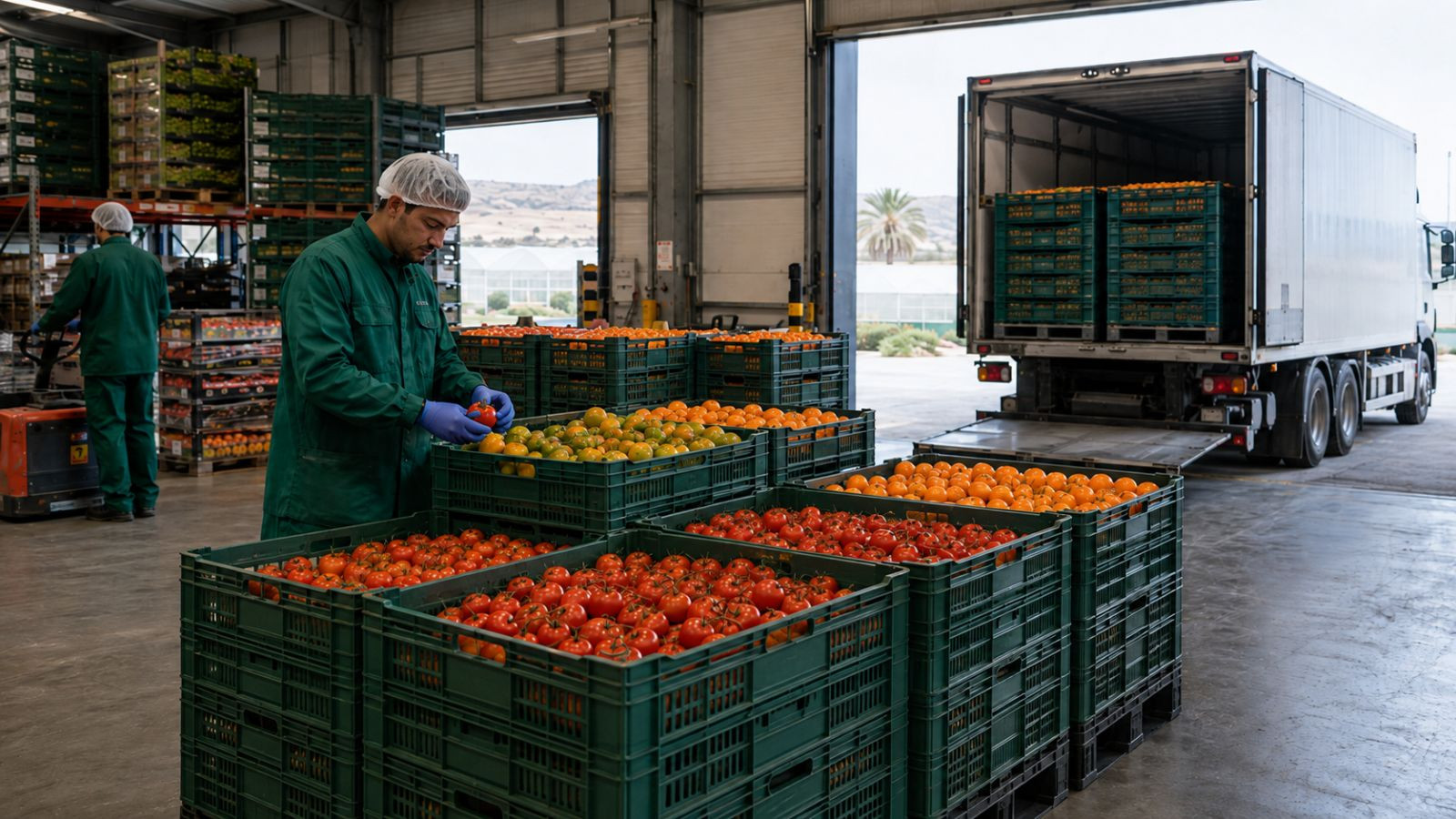
Morocco exports far more than fresh vegetables and citrus fruit. Tomatoes, berries, canned sardines, sugar, fresh beans, avocados, and other food products all hold significant positions in the country's current export portfolio. In 2025, exports from the "agriculture and agri-food" sector reached MAD 86.8 billion, accounting for around 18.5% of Morocco's total merchandise exports. The overall figure was almost unchanged from 2024: primary agriculture expanded, while food processing and fisheries declined.
At a Glance
- Morocco's agricultural and agri-food exports totaled approximately MAD 86.8 billion in 2025.
- Fresh tomato exports were worth around $1.21 billion in 2024.
- Other major categories include sugar, canned sardines, berries, and citrus fruit.
- Europe is the primary market for many fresh vegetables and berries, while citrus fruit is also shipped extensively to North America, and sugar goes to Turkey, Africa, and Middle Eastern markets.
- For perishable products, road freight, Ro-Ro services, and cold-chain logistics through European transport corridors are particularly important.
Exports in Numbers
The detailed product-level data below refer to 2024 and are based on Morocco-reporter statistics from WITS/UN Comtrade. They should not be interpreted as a breakdown of the Office des Changes macro-level figure for 2025.
| Category | 2024 Exports | Main Markets |
| Fresh tomatoes | $1.21 billion | France, United Kingdom, Netherlands |
| Sugar HS 170199 | $880 million | Turkey, Lebanon, Ghana, Libya |
| Canned sardines | $702 million | France, United States, United Kingdom |
| Raspberries, blackberries, and related berries | $578 million | United Kingdom, Spain, Netherlands |
| Blueberries and other Vaccinium | $427 million | Spain, Netherlands, United Kingdom |
| Mandarins and clementines | $422 million | United States, Canada, United Kingdom |
Main Export Products
Fresh Vegetables
Tomatoes remain one of Morocco's most significant food export categories. In 2024, the country exported around 798,000 metric tons of fresh tomatoes worth $1.21 billion. France accounted for more than half of the value of these shipments. Fresh beans are another important category, with exports reaching approximately $340 million, along with peppers at around $297 million. This product mix makes Morocco an important source of fresh produce for European buyers.
Fish and Seafood
Morocco has a well-developed fish-processing industry. Exports of canned sardines under HS 160413 alone were worth around $702 million in 2024. The market geography is broader than for fresh vegetables, with substantial shipments going to France, the United States, the United Kingdom, Nigeria, and the Netherlands. Buyers need to distinguish carefully between fresh and frozen fish, canned products, and other processed categories, as requirements for facilities, certifications, and logistics differ.
Sugar
Sugar emerged as one of Morocco's largest individual export categories. Exports under HS 170199 reached nearly $880 million in 2024, compared with approximately $404 million a year earlier. Unlike vegetables, its principal markets are not confined to Europe. Major buyers included Turkey, Lebanon, Ghana, Libya, and Côte d'Ivoire. This category is better understood as an industrial and trading supply chain rather than solely as the output of domestic agricultural production.
Berries
Fresh raspberries, blackberries, and related berries generated around $578 million in exports, while blueberries and other Vaccinium contributed another $427 million in 2024. The export value of blueberries increased by approximately 35% compared with 2023. Most buyers are concentrated in Europe and the United Kingdom, making delivery speed, packhouse operations, cooling, and consistent product specifications critical for this trade.
Citrus Fruit, Avocados, and Olives
Mandarins and clementines generated around $422 million in exports in 2024. Nearly half of the value in this category came from the United States and Canada, which gives citrus fruit a different market profile from most fresh vegetables. Avocado exports reached approximately $220 million. Olives and olive oil also maintain an established B2B segment, although individual oilseed-related categories remain significantly smaller in export value than tomatoes, berries, or sardines.
Main Markets
The European Union remains the core market for Moroccan fruit and vegetable exports. In 2024, the EU imported €3.45 billion worth of agricultural and agri-food products from Morocco. Vegetables accounted for almost half of that value, while fruit and nuts represented roughly another third.
The market structure, however, varies by product. France is particularly important for tomatoes, while Spain and the Netherlands frequently serve both as destination markets and distribution hubs for vegetables, berries, and avocados. The United States and Canada are significant markets for citrus exports. Sugar is also oriented toward Turkey, the Middle East, and West Africa, while canned sardines have a considerably more diversified geographic reach.
Logistics
For European buyers, one of Morocco's main advantages is its short transport chain across the Mediterranean. Tanger Med is the country's principal hub for road freight and Ro-Ro services. In 2024, 516,842 trucks passed through the port, an increase of 8.1% from the previous year, while agri-food truck traffic rose by 7.2%.
For tomatoes, berries, and other perishable products, refrigerated transport, pre-cooling, and maintaining the required temperature through to the buyer's distribution center are particularly important. For more shelf-stable products, including canned goods and sugar, the choice between sea and road transport depends more heavily on shipment size and the destination market.
What B2B Buyers Should Consider
Before signing a contract, buyers should verify not only the exporter but also the actual facility where the product is produced, packed, or processed. Product specifications, origin, labeling, packaging, traceability, and required certifications should all be agreed before the order is confirmed.
Export requirements vary by category and destination market. ONSSA states that products subject to sanitary or phytosanitary controls must comply with the requirements of the destination country and be accompanied by the necessary official documents.
For perishable goods, buyers should also establish in advance who is responsible for maintaining the required temperature, when risk transfers under the agreed Incoterms, and what procedures apply in the event of a delivery delay.
Where to Find Suppliers
AllFoods Market already features Moroccan producers of tomatoes, berries, citrus fruit, canned sardines, and olive oil. Buyers can begin their search on the Morocco food suppliers and manufacturers page. As the country content cluster develops, this hub should be connected with dedicated articles on tomatoes, sardines, berries, sugar, citrus fruit, and other export categories.
FAQ
What food products does Morocco export the most?
Major individual categories include fresh tomatoes, sugar, canned sardines, berries, and citrus fruit. Morocco also exports fresh beans, peppers, avocados, olives, and a range of other fresh and processed food products.
Where does Morocco export its food products?
Europe is the main destination for many vegetables and berries. France is particularly important for tomatoes. The United States and Canada account for a significant share of citrus exports, while sugar is also shipped to Turkey, the Middle East, and African markets.
What documents are required to import food products from Morocco?
Documentation requirements depend on the product and destination country. Some categories require ONSSA sanitary or phytosanitary certificates, and the production facility must meet the requirements of the target market. Buyers should verify the applicable requirements before signing a contract.
How dependent is Morocco on weather conditions?
Climate risk is significant. After several years of drought, rainfall improved during the 2025/26 season, but water scarcity remains a structural issue. For buyers, this means monitoring the specific crop season rather than relying solely on long-term historical statistics.
Sources and Data
Office des Changes - Morocco's foreign trade
WITS - World Bank and UN Comtrade trade statistics
European Commission - EU-Morocco trade
ONSSA - import and export controls
Tanger Med
FAO GIEWS - Morocco
AllFoods Market: Latest Blog Posts
-
Top 10 Supermarket Chains in Austria: A Brief Overview
Austria’s grocery retail market brings together national chains, international groups, discounter...
-
Top 10 Supermarket Chains in Belgium: A Brief Overview
Belgium’s grocery retail sector brings together national chains, international groups, discounter...
-
Olive Oil Producers in Spain for B2B Sourcing
Spain's olive oil sector combines cooperative mills, industrial processors, refiners, bottlers, a...
-
Top 10 Largest Grocery Chains in Italy
Italy’s grocery market is divided among cooperative groups, national supermarket brands, internat...
-
Top 10 Largest Grocery Chains in Sweden: A Brief Overview
An overview of Sweden's largest grocery retail chains, including store formats, geographic covera...