

 Español
 Русский
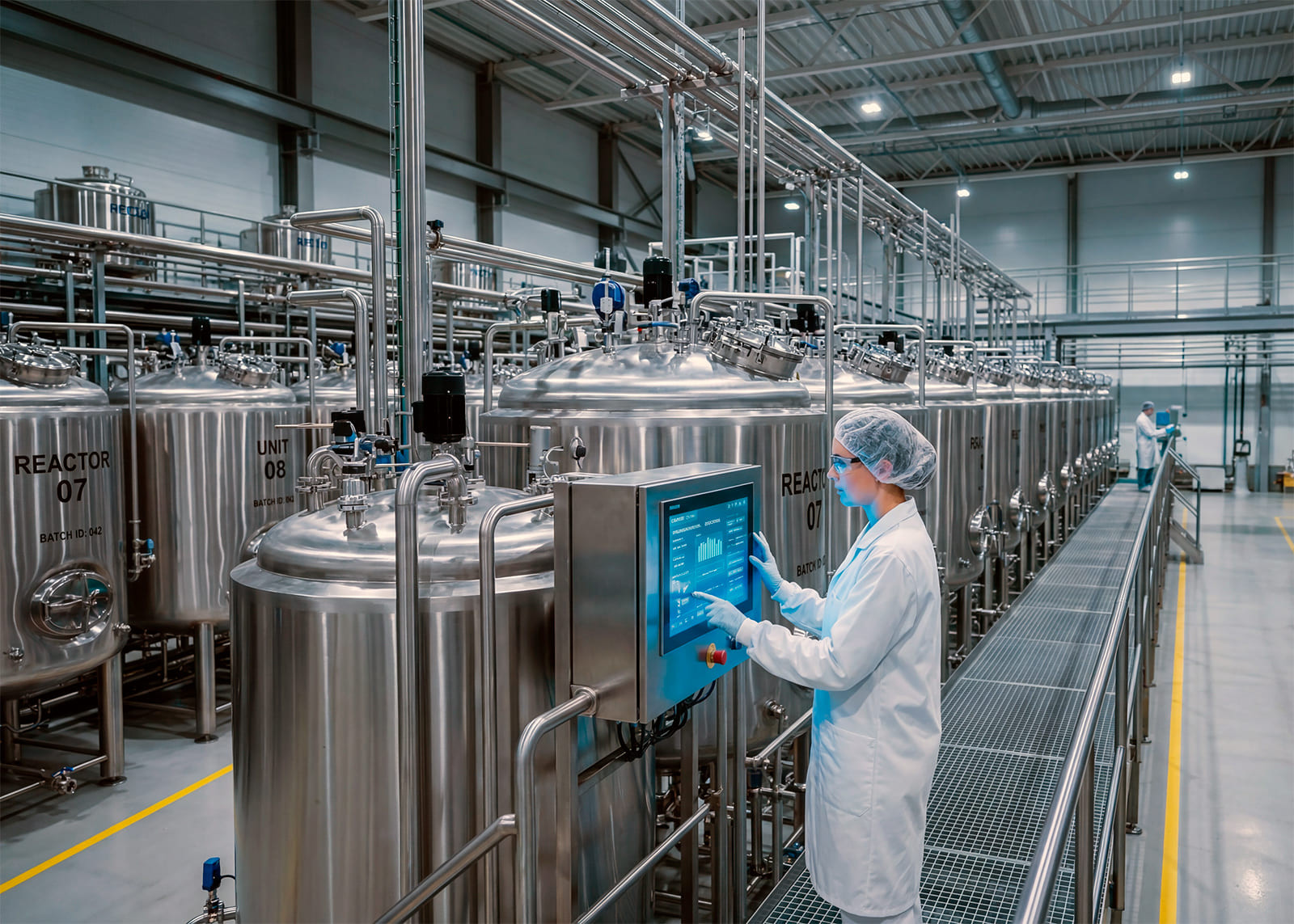
The Role of Fermentation in the Food Industry
What Fermentation Means in the Food Industry
Fermentation in the food industry is a controlled bioprocess in which microorganisms and their enzymatic activity deliberately alter the properties of raw materials. In the academic review Global Regulatory Frameworks for Fermented Foods: A Review, devoted to fermented food products, such products are defined as foods created through the desirable growth of microorganisms and the enzymatic transformation of food components. For the industry, this definition matters because it immediately shifts the discussion from a household context to a technological one: the issue is not a spontaneous “natural process,” but a controlled modification of the product matrix aimed at a defined outcome.
Contents
- How industrial fermentation differs from household fermentation
- Types of fermentation used in the food industry
- How fermentation works in key product categories
- The production value fermentation creates for business
- Parameters that determine the safety and quality of fermented products
- Where fermentation creates commercial advantage
- Where the limitations and risks of fermentation lie
- How the role of fermentation is changing in food innovation and technology
- Types of companies for which fermentation is especially important
- What fermentation means for food business strategy
In industrial terms, fermentation addresses several tasks at once. It helps shape acidity, aroma profile, texture, gas formation, and product stability, and in some cases affects shelf life. That is why it is incorrect to view it only as a traditional preservation method. In the modern food industry, it is a full-fledged production tool operating at the intersection of technology, quality, and product strategy.
How Industrial Fermentation Differs from Household Fermentation
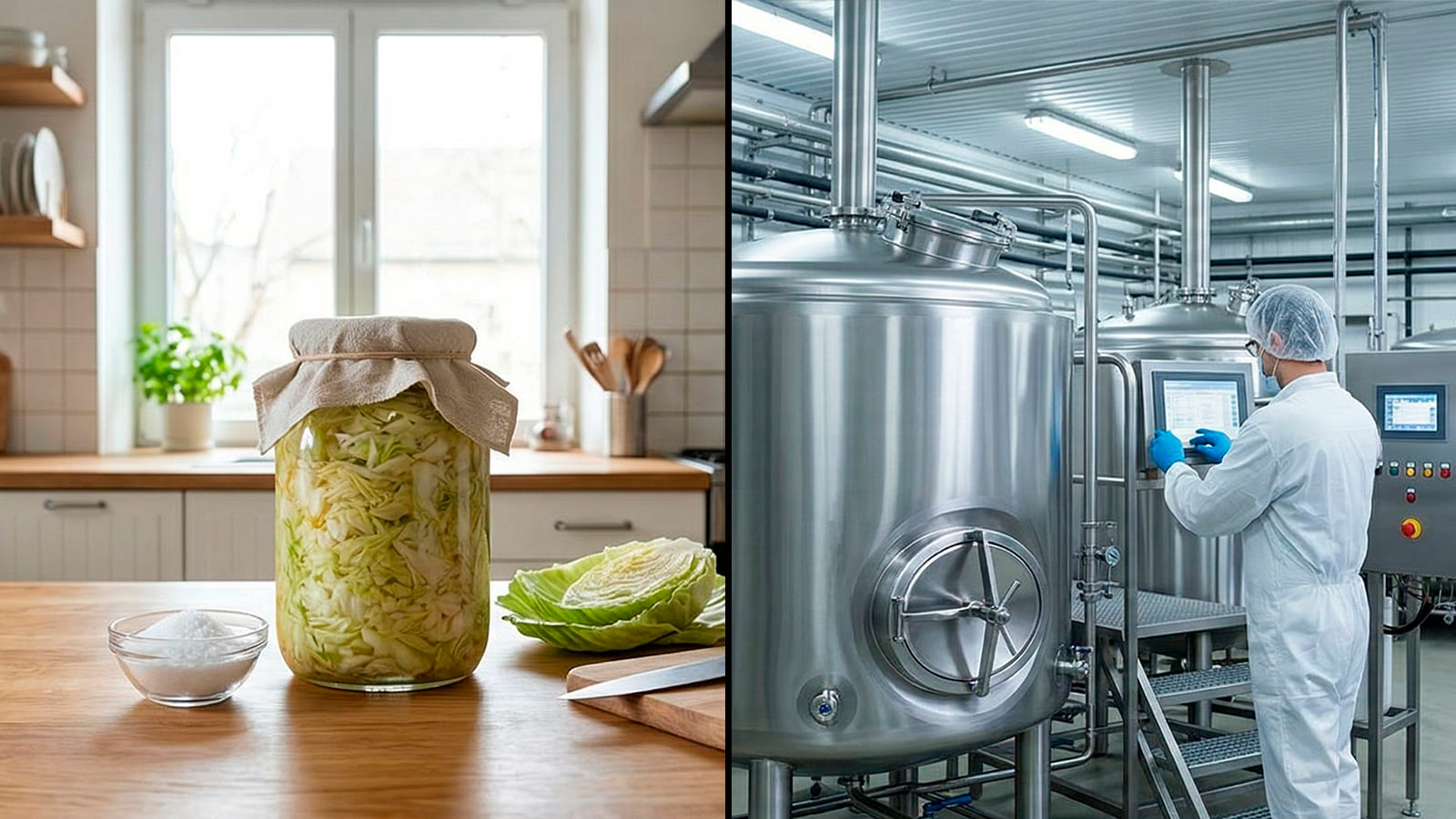
The household view of fermentation is usually associated with a spontaneous process in which raw material changes under the influence of natural microflora, and the result is assessed by taste, smell, and appearance. In industry, such an approach is unacceptable. Here, fermentation begins not with intuition, but with the choice of culture, environmental parameters, and the expected technological effect. Otherwise, it ceases to be a tool and becomes a source of variability.
This distinction is clearly illustrated by fermented dairy products, as directly reflected in CODEX STAN 243-2003: Standard for Fermented Milks. Codex defines them as products obtained by fermenting milk with suitable microorganisms accompanied by a reduction in pH, and the starter microorganisms must remain viable, active, and present in sufficient numbers until the end of shelf life if no heat treatment has been applied after fermentation. This is no longer “fermentation in general,” but a process with defined criteria that must be maintained throughout the entire shelf life.
Industrial fermentation also relies on specific cultures rather than an undefined microbiota. For yogurt, the standard explicitly names the symbiotic cultures Streptococcus thermophilus and Lactobacillus delbrueckii subsp. bulgaricus; for kefir, it describes a complex starter system involving lactic acid bacteria, acetic acid bacteria, and yeasts. This matters not only to the technologist, but also to procurement, labeling, and quality control: once a product is declared fermented, the process must have a reproducible microbiological logic.
In the industrial environment, the role of fermentation has long extended beyond the historical preservation of food. As noted in the review devoted to the role of fermentation in the food industry - An overview of fermentation in the food industry – looking back from a new perspective, the development of biotechnology has turned it into a standard production process, and the use of starter cultures makes it possible to obtain a standardized product. The value of fermentation today lies not in its “traditional” character, but in its ability to predictably manage product quality, product properties, and consistency from batch to batch.
At this level, fermentation becomes not merely a biological phenomenon, but a platform for managing product properties. For business, what matters is no longer only the microorganisms themselves, but also the inoculation regime, substrate composition, acidification rate, the point at which the process is stopped, and how the product changes during storage. This is where its real B2B value emerges: the technologist gets a controlled process, quality control gets measurable control parameters, and the business gets a tool for creating quality, added value, and reduced variability.
Types of Fermentation Used in the Food Industry
There is no single “universal” fermentation in the food industry. The term covers different biochemical pathways, each delivering its own technological and sensory outcome. For a professional discussion, it is important not merely to list these types, but to show what function each performs in the product, where it creates value, and what requirements it places on the process.
Lactic Acid Fermentation and Its Role in Product Stability
Lactic acid fermentation is one of the key types for the food industry because it is directly linked to the management of acidity, stability, and product reproducibility. Its practical value is not limited to changing taste: by lowering pH, it creates a more predictable environment, which makes it especially important in fermented dairy, vegetable processing, sourdough bread, and a number of meat technologies.
Its industrial role is particularly evident in the dairy category. Codex Alimentarius standards — the international body of food standards — link fermented products not only to the fact of fermentation itself, but also to specific cultures and to the requirement that microorganisms remain viable and active until the end of shelf life. This shows that lactic acid fermentation in industry is not merely a source of acidity, but a standardization mechanism that helps maintain the required consistency, taste, and product stability within a reproducible framework.
For business, its significance goes beyond microbiology. In sensitive categories where consumers quickly notice deviations in texture and taste, lactic acid fermentation affects assortment stability, complaint rates, and the predictability of quality from batch to batch.
Alcoholic Fermentation, Acetic Acid Fermentation, and Propionic Fermentation in Applied Context
Alcoholic fermentation is primarily associated with the activity of yeasts, which convert sugars into ethanol and carbon dioxide. In the food industry, it matters not only for alcoholic beverages, but also for baking, where gas formation determines dough structure. Its applied role lies in the fact that it shapes not only alcohol or leavening, but also a significant part of the final product’s aroma profile.
Acetic acid fermentation works differently: acetic acid bacteria oxidize ethanol into acetic acid. In industrial vinegar production, this is no longer a side effect of souring, but a separate technological system with its own cultures, aeration regimes, and process stability requirements, as shown in the review Latest Trends in Industrial Vinegar Production and the Role of Acetic Acid Bacteria. The practical value of this type of fermentation lies in its ability to produce not simply an acid, but a product with a controlled quality profile and predictable characteristics.
Propionic fermentation is used more narrowly, but remains critical for certain categories. In particular, propionic acid bacteria are traditionally included in starter cultures for Swiss-type cheeses, where they create the characteristic flavor and the typical structure with “eyes,” as discussed in Propionic Acid Fermentation—Study of Substrates, Strains, and Antimicrobial Properties. This is a clear case where a specific type of fermentation becomes an instrument of product identity: without it, the category loses its recognizable profile.
Mold Fermentation, Solid-State Fermentation, and Mixed Fermentation in Complex Food Systems
Mold fermentation and solid-state fermentation are especially important where deep enzymatic breakdown of proteins and carbohydrates is required. In the food industry, this primarily includes koji technologies and products such as soy sauce, where molds of the genus Aspergillus create the enzymatic system for the further development of flavor and aroma. The review Koji Molds for Japanese Soy Sauce Brewing: Characteristics and Key Enzymes emphasizes that their key role in soy sauce production is the synthesis of enzymes that break down large raw-material molecules into amino acids and glucose. For the food business, this is not an exotic technology, but an example of how fermentation literally creates the product’s flavor value.
Solid-state systems are also important because they make it possible to work with dense substrates where classical liquid fermentation does not deliver the desired result. This is particularly relevant for soy, grains, and a range of other plant raw materials in which enzymatic hydrolysis becomes part of the product itself rather than merely an intermediate processing stage.
Mixed fermentation represents a separate class of complex systems in which the result is created not by a single culture, but by a consortium of bacteria and yeasts. The most obvious example is kefir, for which Codex describes the starter system as a specific association of lactic acid and acetic acid bacteria with yeasts. For industry, such systems are especially interesting because they deliver a more complex sensory profile, while simultaneously increasing standardization requirements. In other words, mixed fermentation expands product possibilities, but requires more precise process control.
How Fermentation Works in Key Product Categories

In different categories, fermentation performs different functions:
- It shapes product structure and rheological properties;
- It controls sensory properties (taste and aroma);
- It improves the stability of unstable formulations;
- It serves as a differentiation tool to stand apart from competitors.
Dairy Products, Baking, and Beverages
In the dairy industry, fermentation is one of the core technological mechanisms. It governs acidification, affects protein coagulation, and shapes consistency, taste, and product stability. The international standard for fermented dairy products explicitly states that such products are obtained by fermenting milk with specific microorganisms, and in some cases starter cultures must remain viable and active until the end of shelf life. For business, this means that in the dairy category fermentation is not an auxiliary recipe element, but the basis of product reproducibility.
In baking, its role is different. Here, fermentation affects not only taste, but also dough rheology, gas retention, crumb structure, and the overall stability of baked goods. The review on the role of lactic acid bacteria and yeasts in sourdough fermentation in bread production emphasizes that the properties of the final product depend on microbiota composition, temperature, pH, and process duration. For industrial production, this is especially important where consistent quality is required without strong dependence on the human factor.
In beverages, fermentation functions as a mechanism of biochemical transformation of raw materials. In alcoholic categories, it converts sugars into ethanol and carbon dioxide, but its significance does not end there: it also shapes part of the aroma profile, body, and sensory recognizability of the beverage. For a B2B audience, this matters for a simple reason: in beverages, fermentation is not just a production stage, but a tool for tuning the product to the category and the market.
Sauces, Seasonings, and Vegetable Processing
In sauces and seasonings, fermentation is especially valuable where the product is sold not only through function, but also through flavor complexity. This is clearly seen in soy sauce, where a multistage system involving molds, lactic acid bacteria, and yeasts sequentially shapes amino acid composition, aroma, and depth of taste. Here, fermentation does not simply help process raw materials — it creates the product’s commercial value itself.
For seasonings and fermented flavor ingredients, this is especially important in the professional and premium segments. The more complex and stable the fermentation profile, the higher the likelihood that the product will be perceived not as a mass-market analogue, but as a distinct category with its own added value. This directly affects assortment, positioning, and margins.
In vegetable processing, fermentation solves a different task: it helps manage acidity, taste, and microbial development in unstable plant raw materials. Using kimchi as an example, it has been shown that starter culture selection affects the profile of organic acids and the controllability of the process, as discussed in the study Organic acid type in kimchi is a key factor for determining kimchi starters. For the food business, this means a shift from the model of “traditional pickling” to a model of standardization and reduced batch-to-batch variability.
Meat Products, the Plant-Based Alternatives Segment, and Functional Ingredients
In fermented meat products, fermentation works primarily as a tool for modifying raw-material structure and stabilizing the product. It helps accelerate acidification, shape the sensory profile, and suppress part of the undesirable microflora when the process is properly designed. The review on the role of starter cultures in the safety of fermented meat products shows that these cultures are used not only for flavor, but also as a factor of standardization and microbiological control. This is critical for the category: the cost of error is higher here than in many other segments, and the requirements for process control are stricter.
In the plant-based alternatives segment, fermentation has already become not an auxiliary but a strategic technology. It is used to improve taste, overcome raw-material limitations, increase digestibility, and create new textural solutions. In materials on the scientific foundations of fermentation for alternative proteins, three different value-creation models are identified: traditional fermentation, precision fermentation, and microbial biomass production. For manufacturers, this means that fermentation helps not just process the plant base, but bring the product closer in sensory and functional terms to market expectations.
In the functional ingredients segment, fermentation works in an even more applied way — as a production platform for obtaining vitamins, enzymes, flavor components, and other high-value substances. One illustrative example is the industrial production of vitamin B12 through microbial fermentation, discussed in Bioprocess Strategies for Vitamin B12 Production by Microbial Fermentation. For the B2B environment, this leads to an important conclusion: fermentation is not only a way to produce finished food products, but also a way to create high-value ingredients for other manufacturers.
The Production Value of Fermentation for Business
The production value of fermentation lies not in abstract “naturalness,” but in the manageability of the outcome. In a controlled process, fermentation gives business the following advantages:
- Reduced variability: alignment of characteristics from batch to batch;
- Quality stabilization: predictable product behavior during storage;
- Sensory distinctiveness: creation of a complex, differentiated profile;
- Protection against copying: the creation of a product that cannot be replicated simply by blending raw materials.
Control over Taste, Texture, and Batch Stability
One of the main production effects of fermentation is the ability to control characteristics that are difficult to standardize through mechanical or thermal processing alone. This is especially evident in categories where taste, texture, and aroma are formed not by a single operation, but by a sequence of biochemical transformations.
In dairy products, fermentation determines acidity, curd structure, viscosity, and the overall sensory perception. In baking, it affects dough rheology and aroma profile. In sauces and fermented seasonings, it influences depth of taste and the complexity of the amino acid and aroma profile. In practice, this means that fermentation makes it possible to obtain not just a similar product, but a reproducible one with repeatable characteristics from batch to batch.
For business, this reduces dependence on random variability in raw materials and on the human factor. The better the process is controlled, the more predictable the final product becomes and the lower the risk that the same stock keeping unit will be perceived differently by the market across different batches.
Shelf Life, Microbiological Stability, and Reduced Variability
Fermentation has historically been associated with product preservation, but in industry its value is broader. It helps create a more stable environment in which it is easier to maintain the required characteristics throughout shelf life. In the previously mentioned review on fermentation in the food industry from a new perspective, its development is directly linked to safety, shelf life, and the controlled transformation of raw materials.
At the production level, this means several effects at once. Lower pH and the activity of desirable microbiota can function as part of the product’s barrier system. Fermentation also helps equalize product behavior during storage and reduce batch-to-batch variability where raw materials are initially unstable in composition or microbial load.
At the same time, it is important not to confuse cause and effect here. Fermentation does not automatically extend shelf life. It creates such an opportunity only as part of a properly designed and controlled process. If control is weak, the same biological mechanism begins to amplify instability rather than reduce it.
Added Value, Raw-Material Processing, and the Creation of New Ingredients
Fermentation is also valuable for business because it makes it possible to move beyond competing only on raw-material price. It can be used to create more complex flavor profiles, new categories, functional ingredients, and products with higher perceived value.
In some segments, this is expressed directly. Fermented sauces and seasonings achieve higher market valuation not because of packaging, but because of flavor depth and technological complexity. In the ingredients segment, fermentation makes it possible to produce vitamins, enzymes, protein, and flavor components for other manufacturers. In the plant-based alternatives and food technology segments, it becomes no longer just a production stage, but part of the R&D model.
A separate area is the processing of by-streams and lower-value raw-material fractions. In the previously mentioned review of fermentation in industry, the processing of food waste using fermentation is highlighted as a distinct area linked to the circular economy and sustainable production. For business, this matters not because of a fashionable agenda, but because fermentation can turn low-value residues into a new commercial or technological resource.
Parameters That Determine the Safety and Quality of Fermented Products
Fermentation is controlled microbiological work, so safety and quality here are determined not by one successful formulation, but by a system of parameters that must be kept within defined limits. As soon as control weakens, fermentation stops creating value and begins to accumulate technological and commercial risks.
The Role of Starter Cultures and Control of Microbiological Stability
Starter cultures are one of the key tools for managing fermentation. They make the process reproducible and the product more stable in terms of acidity, taste, texture, and microbiological profile. Without them, fermentation in many cases remains dependent on the random microflora of the raw material and the environment, which for industrial production means greater variability and a higher risk of deviations.
This is especially evident in fermented meat products. The study on the effect of starter cultures on the quality of fermented sausages shows that such cultures are used not only to shape sensory properties, but also to accelerate acidification, stabilize the process, and limit the growth of undesirable microflora. For business, this means that the starter culture is not a secondary component, but part of the quality system.
In the global market, this need for controllability has created a stand-alone B2B solutions industry, led by biotechnology giants such as Novonesis (the company formed in 2024 through the merger of Chr. Hansen and Novozymes) and IFF (which incorporated the Danisco division). For food manufacturers, these corporations sell not merely bacterial strains, but a “guarantee of result”: cultures with a defined phage-resistance profile (protection against viruses that infect bacteria), a precise acidification curve, and the ability to form a specific texture (for example, in DVS culture ranges for cheesemaking and yogurt). In this logic, the food plant buys predictability from its biotech partner, minimizing the risk that a multi-ton batch of milk will be spoiled due to a random shift in microflora.
Control of microbiological stability begins not after a batch has been produced, but already at the process design stage. The manufacturer must understand which microorganisms should dominate, how quickly pH should change, what metabolic profile is considered normal, and how the product will behave until the end of shelf life. Otherwise, batch stability becomes a matter of chance.
Critical Process Parameters: pH, Temperature, Time, and Sanitation
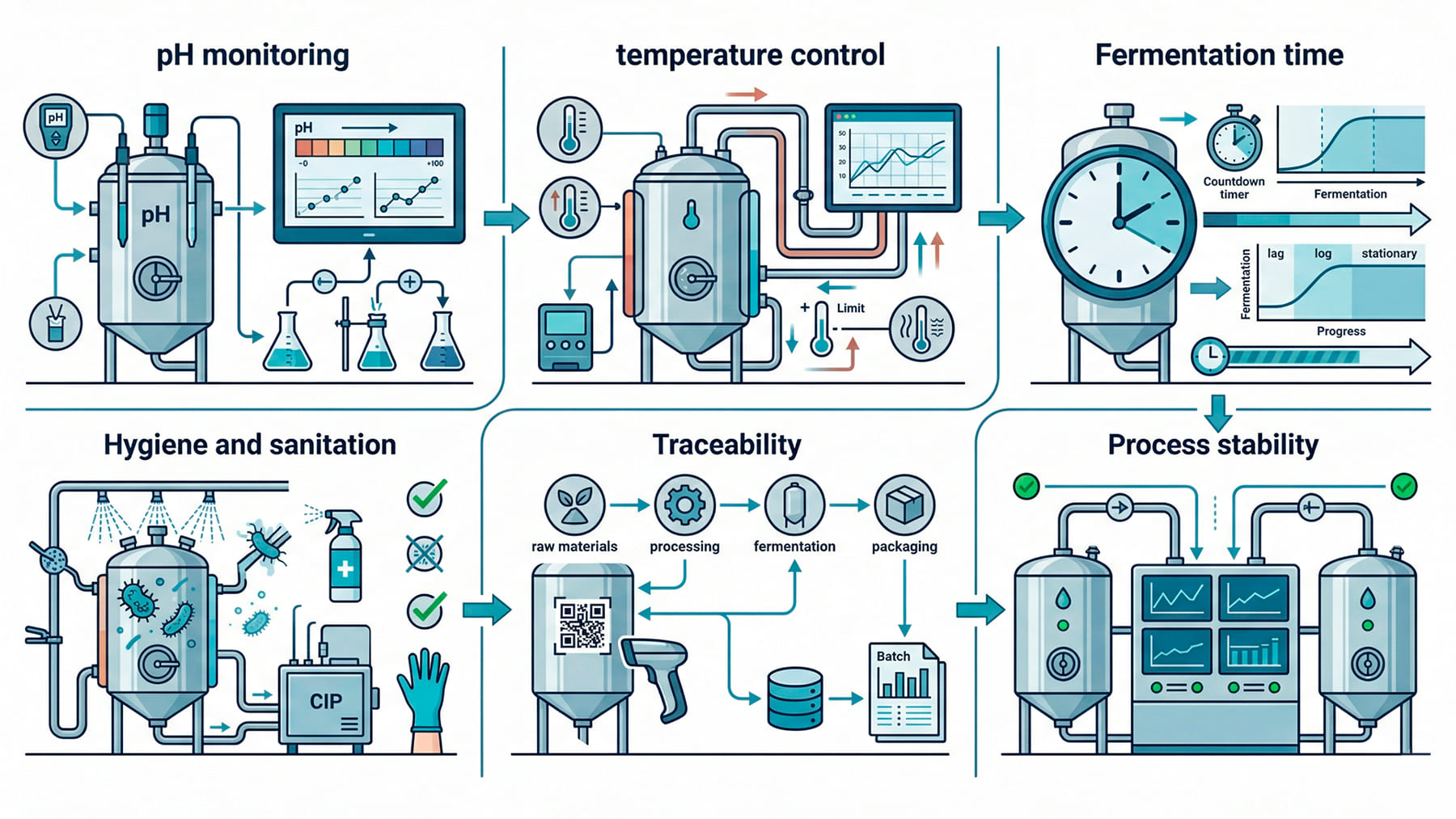
In fermentation, there are parameters that cannot be treated as secondary. pH, temperature, process duration, and the sanitary condition of equipment and the production environment form the basis of process control. They cannot be compensated for by either a strong starter culture or high-quality raw materials if the process itself is poorly designed.
pH matters as an indicator of acidification dynamics and as one of the factors of product stability. Temperature determines the rate and nature of microbial activity. Time affects not only the depth of fermentation, but also the risk of overdevelopment of undesirable processes. Sanitation is critical because fermentation does not eliminate the risk of external contamination and, in some cases, makes the consequences of such an error even more serious.
From a practical standpoint, fermentation is not about “letting the product sit,” but about maintaining a defined process window. As long as that window is maintained, the process supports quality. Once it is breached, variability, defects, and the likelihood of complaints begin to increase.
HACCP, Traceability, and Production Discipline
In industrial fermentation, safety cannot be built on trust in tradition or in the “naturalness” of the process. It must be embedded in the production management system. The EAEU Technical Regulation TR CU 021/2011 “On Food Safety” explicitly states that the manufacturer is required to implement HACCP procedures (Hazard Analysis and Critical Control Points), which in the context of fermentation include:
- incoming raw-material control;
- monitoring of critical process stages;
- compliance with temperature conditions and sanitation requirements;
- strict recordkeeping and batch traceability.
For fermented products, this is especially important because the technology itself involves the active development of microbiological processes. That is why traceability, batch production records, critical control point monitoring, and production discipline become not a formal obligation, but the basis of process stability and of protecting the business from losses.
It is precisely for this reason that a professional discussion of fermentation cannot be limited to formulation or culture selection. Without HACCP, traceability, and production discipline, fermentation may look convincing as a concept, but it does not become a reliable industrial technology.
Where Fermentation Creates Commercial Advantage
The commercial advantage of fermentation does not arise where a product can simply be called “traditional” or “natural,” but where the technology creates a measurable difference in the market. In the food business, this usually shows up in three ways: the product is harder to replace with a direct analogue, its perceived value is higher, and the category itself gains more sustainable. Fermentation does not drive commercial value on its own, but through taste, texture, technological profile, origin, and consistency of outcome.
For a B2B audience, this is fundamental. A buyer, category manager, or distributor does not assess the “beauty of the technology,” but whether it helps maintain the product’s place in the assortment, justify a higher price, reduce dependence on promotions, and support recognition within the category. If fermentation does not create a clear point of difference for the market, it remains a costly production feature rather than a competitive advantage.
Fermentation as a Factor of Product Differentiation
Fermentation helps clearly distinguish a product when it influences taste, aroma, and overall product perception more deeply than an ordinary recipe adjustment. This is especially evident in categories where competition is built not only on price, but also on flavor, recognizable product character, and perceived quality. A representative example is fermented sauces and seasonings. Research on koji technology, discussed earlier, and on soy sauce fermentation shows that a multistage process creates an amino acid composition, aroma profile, and depth of flavor that are difficult to reproduce through a simplified process or basic imitation.
From a commercial standpoint, this means moving away from direct competition with mass-market analogues. The product becomes not simply “another sauce,” beverage, or cultured product, but a product with its own technological profile. For the manufacturer, this also provides protection against the loss of the product’s distinguishing features: the more strongly taste, texture, or functional differentiation is tied to a real fermentation scheme, the harder it is for a competitor to replicate the product without a comparable technological base.
“Clean Label,” Functional Products, and Premium Positioning
Fermentation aligns well with the “clean label” trend (the rejection of artificial additives) and the concept of functional nutrition, but this is also where it is easy to slip into marketing oversimplification. A more accurate way to put it is this: fermentation can support a cleaner product concept through its own biochemical logic — by working with acidity, taste, and texture and, in some cases, reducing the need for certain external corrective additives. But that does not make every fermented product automatically suitable for “clean label” standards.
Its value is even more evident in the functional segment. Fermentation is used not only to modify organoleptic properties, but also to create ingredients and components with additional nutritional value. One illustrative example is the industrial production of vitamin B12 through microbial fermentation. For the market, this matters not as an isolated scientific precedent, but as confirmation that fermentation has long moved beyond traditional categories and has become a tool for creating functional products and ingredients.
In the premium segment, fermentation works as a value enhancer only when its result is genuinely perceived as a marker of quality, complexity, and technological rigor. This is especially noticeable in sauces, beverages, fermented dairy products, specialized bakery products, and some solutions in the plant-based alternatives segment. But high perceived value here does not rest on the word “fermented,” but on the stability and credibility of the product itself. If the technology is unstable, such positioning quickly turns into a source of complaints and loss of trust.
Assortment, Export Potential, and Category Resilience
Fermentation influences assortment by making it possible to build a deeper structure within a category. On a single technological base, it is possible to create product lines with different degrees of flavor maturity, functionality, raw-material origin, and target positioning. For a brand, this is a way not simply to expand shelf presence, but to build a more manageable assortment without random proliferation of SKUs.
The export potential of fermented categories is especially visible where authenticity and industrial reproducibility come together. Kimchi is a telling example: according to data based on Korean export statistics, exports of this category reached 47,100 tons and USD 163.6 million in 2024, with shipments going to 95 countries, as reported in the article on record kimchi exports in 2024. For B2B logic, what matters here is not the specific Korean case itself, but the conclusion: a fermented product can scale globally if it has stable technology, a clearly understandable demand category, and reproducible quality.
The market resilience of fermented categories is also supported by the fact that they often sit at the intersection of several demand drivers: interest in flavor, functional consumption, gastronomic identity, and demand for less standardized solutions in retail and foodservice. But that resilience arises only where fermentation is embedded in the quality system. Without that, the same technology starts working against scale-up and makes the category less reliable from a commercial standpoint.
Where the Limitations and Risks of Fermentation Lie
Fermentation has a strong side: it can genuinely increase product value. But it also has a weak side: the market can easily begin to overestimate it as a universal mark of quality. For B2B practice, this is dangerous because fermentation does not lower production requirements — it raises them. The greater the role of microbiology in the product, the higher the cost of error.
That is why the limitations of fermentation cannot be treated as secondary. For the food business, it is always a combination of opportunities and constraints: the technology can improve a product, but under weak control it can just as easily amplify instability, defects, and losses.
Why Fermentation Does Not Guarantee Safety on Its Own
One of the most harmful mistakes is to assume that fermentation automatically makes a product safe. That is incorrect even for classic categories. Safety is created not by the mere fact of fermentation, but by the control system, which includes raw materials, starter cultures, sanitation, process parameters, packaging, and storage.
This is especially clear in fermented meat products. Such products remain vulnerable to both microbiological and chemical hazards, including pathogens, biogenic amines, and mycotoxins. In other words, fermentation can be part of a barrier system, but it does not replace the safety system.
For the B2B reader, this is fundamental. As soon as a company begins to perceive fermentation as a “natural shield,” it underestimates the real process risks. In practice, this leads to batch instability, regulatory issues, returns, and loss of trust in the product.
Which Mistakes Lead to Instability, Defects, and Complaints
Typical mistakes in fermentation are rarely linked to a single catastrophic cause. More often, they are the accumulation of deviations: incorrect starter selection, weak pH control, temperature drift, unstable raw materials, sanitation failures, an incorrect process stop point, or errors in cooling or storage. As a result, what reaches the market is not one major breakdown, but a product with defects, variability, or weakened stability.
In different categories, this appears in different ways. In dairy products, it shows up as unstable acidity, texture defects, and deviations from the declared culture profile. In baking, it appears as unstable aroma and inconsistent dough behavior. In sauces and other complex fermented systems, it appears as flavor variability between batches. In meat products, the cost of error is especially high because deviations affect not only quality, but also safety.
For business, this matters for two reasons. First, a defect in a fermented category usually damages trust more severely than in simpler products. Second, fermentation-related instability is difficult to mask: it is harder to correct at the final stage without undermining the very concept of the product.
Why the Romanticization of Fermentation Is Dangerous for B2B Practice
The romanticization of fermentation is dangerous because it replaces production reality with an attractive story. At the marketing level, it sounds compelling: naturalness, tradition, a living process, craftsmanship. But for B2B practice, that approach is harmful because it shifts attention away from controllability, control, and reproducibility toward product image.
As a result, a company begins to overestimate the cultural or gastronomic side of the subject and underestimate the technological one. This may still work in consumer communication, but for manufacturers, buyers, and contract production sites such an approach is useless. What they need is not a myth about fermentation, but an understanding of exactly where the technology creates value, what resources it requires, and what risks it carries.
That is why, in mature professional treatment, fermentation should be viewed not as a “special magic of the product,” but as a disciplined production tool. Everything else is merely a secondary layer on top.
How the Role of Fermentation Is Changing in Food Innovation and Technology
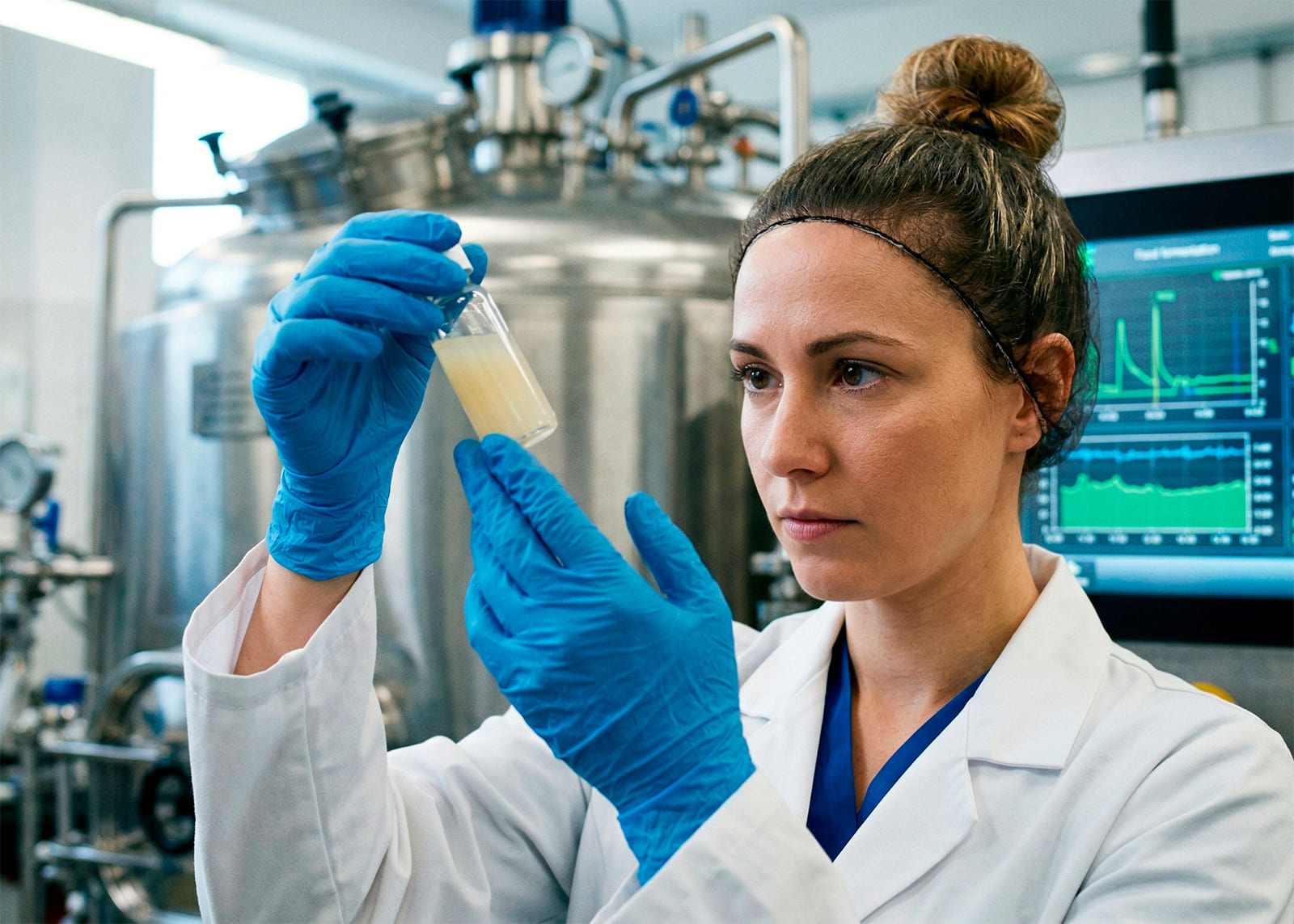
In food technology, fermentation has long ceased to be only part of traditional product categories. Increasingly, it is being used as a tool to create proteins, fats, vitamins, enzymes, and flavor components. This is a fundamental shift: whereas in the classical food industry fermentation is usually embedded in the finished product, in newer technological areas it is increasingly used as a way to obtain the required molecule, ingredient, or biomass.
For the B2B market, this changes the entire framework of the discussion. Fermentation is beginning to be viewed not only as a way to produce cheese, bread, vinegar, or sauce, but also as part of R&D, ingredient design, and the future production model. At the same time, it is incorrect to combine innovative and classical fermentation into one category: their production and economic logic differ.
How Precision Fermentation Differs from Classical Food Fermentation
Classical food fermentation uses microorganisms to modify the food raw material itself and form the final product. The term “precision” (from the English precision) indicates that the process is stripped of random factors and is strictly directed toward the synthesis of a single predefined molecule. That is why precision fermentation solves a different task: here, the microorganism acts as a production system for obtaining a specific target compound. FAO materials — from the Food and Agriculture Organization of the United Nations — emphasize that the term precision fermentation is relatively new, and that the production logic of such processes is built around technology development, fermentation stages up to product isolation, and subsequent downstream processing, as discussed in the article on whether precision fermentation can offer a safe and sustainable future for food production.
In other words, in classical fermentation microorganisms transform the bulk substrate into the final product, whereas in precision fermentation they act as cell factories to synthesize a specific target molecule, which is then used separately. For this article, that distinction is fundamental: without it, it is easy to conflate traditional fermented products with the biotechnological production of ingredients.
A textbook example of this business model is the California company Perfect Day. Instead of using microorganisms to ferment plant raw materials, the company applied precision fermentation (using genetically adapted fungi Trichoderma reesei) to produce whey protein (beta-lactoglobulin) that is biochemically identical to the protein in cow’s milk, as confirmed by the BloombergNEF report. The microflora in Perfect Day’s bioreactors consumes sugars and synthesizes pure dairy protein without the involvement of animals. This ingredient (under the ProFerm brand) is subsequently purchased by FMCG brands for the production of ice cream, cream cheese, and sports nutrition products. For the market, this case became a watershed: it proved that precision fermentation can separate the production of traditional animal proteins from animal agriculture itself, creating an entirely new class of raw material for the food industry.
For the market, this difference is significant as well. Precision fermentation has a different capital intensity, a different regulatory pathway, and a different economic model. It is no longer merely a technological block within a food plant, but an independent platform for ingredient creation.
Fermentation for Biomass Production and New Protein Solutions
Fermentation for biomass production (the directed cultivation of microorganisms) is another important area of food innovation. Here, value is built not on the synthesis of one specific molecule, but on the rapid growth of the cell mass itself, which is then used as a полноценный protein or functional ingredient. In the industry review by the Good Food Institute (GFI), this approach is clearly separated from precision fermentation and treated as an independent business model within the alternative proteins market.
For business, this technology opens fundamentally new possibilities. Microbial biomass production offers a pathway to protein systems that:
- scale according to different laws: the production process does not depend on climate, arable land availability, seasonality, or the cycles of traditional animal agriculture;
- provide development flexibility: technologists gain significantly greater freedom in managing texture, amino acid profile, and the technological properties of the future raw material.
As a result, directed biomass cultivation strengthens the food technology sector not as a passing marketing trend, but as an independent production and investment direction.
At the same time, it would be a mistake to view this approach as universally mature and ready for rapid adoption. The technology for large-scale microbial protein production requires a completely different production infrastructure (large industrial bioreactors), highly specialized biotechnological expertise, and a much longer investment horizon than classical food fermentation.
Where Fermentation Becomes a Platform for Developing the Ingredients of the Future
The strongest innovative potential of fermentation is revealed where it is used as an ingredient development platform. This applies to proteins, vitamins, enzymes, fats, pigments, aromatic components, and other functional molecules that are then integrated into finished products. In this logic, fermentation ceases to be part of a single category and becomes a universal tool of the food industry.
This is especially important for companies that operate not only under a finished-product model, but also as B2B suppliers of solutions for other manufacturers. In such a setup, fermentation becomes the basis for new ingredient lines, more complex plant-based alternative systems, functional additives, and new ways of shaping sensory properties without direct dependence on traditional animal raw materials.
This is precisely where the topic of fermentation reaches the level of the future market structure. It begins to function not merely as a way to improve existing categories, but as a foundation for creating new ones. And that is no longer a question of one technology, but a question of which products and ingredient platforms will be economically and technologically possible in the coming years.
Which Types of Companies Are Most Concerned with Fermentation
Fermentation has different value for different participants in the food market. For some companies, it is the foundation of the product itself. For others, it is a way to increase margins, process raw materials more deeply, or create new ingredients. That is why, in B2B practice, it makes little sense to discuss fermentation as a universally useful topic for everyone. It is far more accurate to look at what specific task it solves within a given business model.
Finished Product Manufacturers and Raw-Material Processors
For finished product manufacturers, fermentation is especially important where it shapes the consumer value of the SKU itself. This is clearly seen in dairy products, baking, beverages, sauces, fermented vegetables, and meat products. In these categories, it affects not a secondary nuance, but the core properties of the product: taste, texture, acidity, sensory depth, stability, and batch repeatability. This follows from the international standards and industry reviews discussed earlier in the text.
For such companies, fermentation matters not because it simply “makes the product tastier.” Its importance lies in helping keep the category from sliding into raw-material competition. If a product is built on a real fermentation logic, it is harder to replace with a direct analogue, and the brand gains more room for pricing and assortment maneuvering.
For raw-material processors, the emphasis shifts. Here, fermentation is valuable as a way to work more deeply with raw-material structure and extract additional value from it. This may involve transforming milk, grain, soy, vegetable raw materials, secondary raw-material resources, or low-margin fractions into higher-value products and ingredients. Industry reviews on fermentation specifically highlight the processing of food waste using fermentation as an element of extending raw-material economics and developing circular production models. For a processor, this is not an optional “green” agenda, but a practical way to reduce losses and create additional value out of material that in another model would remain a low-margin residue.
Ingredient Developers and Contract Manufacturers
For ingredient developers, fermentation is especially important because it works not only for the finished product, but across the entire B2B supply chain. Here, it becomes a platform for producing vitamins, enzymes, proteins, flavor components, and other functional substances that are then used in the formulations of other manufacturers. One clear example is the industrial production of vitamin B12 through microbial fermentation. For companies working with ingredients, this means the ability to build a business not around commodity raw materials, but around more complex and margin-protected solutions.
The role of fermentation is especially visible in the plant-based alternatives, functional nutrition, and food technology segments. Here, it helps solve tasks that are difficult to address through extrusion, flavoring, or ingredient blending alone: improving taste, softening the plant profile, increasing digestibility, creating new textures, and obtaining specific proteins or metabolites. In industry materials, this is treated as a distinct development track for the food industry.
For contract manufacturers, the importance of fermentation stems from another reason. A facility that can work professionally with fermented categories gains not simply one more service, but a separate technological competence that is difficult to copy quickly. But the bar is higher here as well: fermentation processes require more mature control of the environment, sanitation, documentation, stable process conditions, and, in some cases, a longer production cycle. A contract manufacturer that takes on such projects without a real technological base almost inevitably encounters batch instability and client complaints.
Export-Oriented Companies and Brands with a Product Strategy
For export-oriented companies, fermentation matters when it helps connect two things: category recognizability and reproducibility of quality. Export markets demand products with a clear identity, but they do not forgive unstable quality. That is why fermentation becomes an advantage only when the manufacturer can demonstrate stable taste, safety, and shelf life. Kimchi is a good example: a fermented category can scale internationally if it is embedded in industrial and export logic, as noted in the material linked above.
For brands with a clearly defined product strategy, fermentation is also important because it helps build deeper positioning. It can support themes of origin, tradition, clean label, gastronomic complexity, functionality, or technological rigor. But this works only when fermentation is genuinely embedded in the product, rather than used as a marketing overlay. In such a model, it becomes not only a production tool, but also a way to convincingly explain to the market exactly why the product is worth more and why it is harder to replace.
What Fermentation Means for Food Business Strategy
At the strategic level, fermentation is not merely a choice of technology, but a choice of value-creation model. In essence, a company is deciding whether it will compete primarily on price and raw-material availability, or whether it is ready to build a more complex product that requires greater production discipline, but offers more opportunities for differentiation, line extension, and margin protection.
When Fermentation Becomes a Source of Competitive Advantage
Fermentation becomes a competitive advantage not at the moment it appears in the formulation, but at the moment it turns into a stable and recognizable result. The advantage arises where the technology gives the market something that is difficult to replicate by a short route: more complex flavor, a specific texture, a clearly expressed category identity, a functional profile, or a more convincing product concept.
This is especially important in categories where the product is easily compared with numerous standard analogues. If fermentation truly creates a perceptible difference, the manufacturer gains more freedom in pricing, becomes less dependent on constant discounting, and occupies a stronger position in assortment negotiations. If the difference is not recognized by the market, fermentation remains simply a more expensive production scheme.
It works most strongly as an advantage in three cases: when it helps protect against direct price competition, when it creates product depth that is difficult to copy quickly, and when it supports not just one selling point, but a broader brand or category strategy.
When It Requires Serious Investment and Mature Infrastructure
Fermentation requires serious investment when a company moves beyond a simple fermented category and begins building a stable production system around it. The costs here are associated not only with equipment, but also with environmental control, laboratory support, culture selection and validation, sanitary discipline, staff training, documentation, and the stability of the raw-material base.
The more complex the fermentation scheme, the higher the infrastructure requirements. This is especially evident in meat fermentations, complex sauce systems, ingredient production, plant-based alternative development, and even more so in precision fermentation or microbial biomass production technologies. FAO materials specifically emphasize the production logic of such processes through technology development, fermentation stages, and subsequent downstream processing, as shown in the article on the prospects of precision fermentation for food production. This is already a different level of capital intensity and operational maturity.
That is why fermentation does not suit all companies to the same extent. For some, it can become a strong growth direction. For others, it can become an expensive mistake if the business tries to take on processes for which it lacks the infrastructure, expertise, and readiness for a long optimization cycle.
Why Fermentation Is Not Only a Technology, but Also a Management Decision
Fermentation is a management decision because it affects not one production area, but the entire operational logic of the company. It influences requirements for raw materials, the production cycle, personnel, the laboratory, quality, shelf life, assortment model, and the product’s market positioning. The issue is not only whether the process can technically be launched, but whether the company is prepared to embed it into its management system.
In practice, this means that the decision to work with fermentation should not remain solely at the technologist level. It must pass through product strategy, category economics, quality-control requirements, and market expectations. When that does not happen, the company ends up with a typical problem: the technological idea exists separately, while the business model exists separately.
A mature approach looks different: first, the company understands what value it wants to extract from fermentation, then it assesses its ability to keep the process under control, and only after that does it build a product and commercial model around it. It is in this form that fermentation becomes not merely a production method, but part of food business strategy.
Latest blog posts
-
Top 10 Supermarket Chains in Austria: A Brief Overview
Austria’s grocery retail market brings together national chains, international groups, discounter...
-
Top 10 Supermarket Chains in Belgium: A Brief Overview
Belgium’s grocery retail sector brings together national chains, international groups, discounter...
-
Olive Oil Producers in Spain for B2B Sourcing
Spain's olive oil sector combines cooperative mills, industrial processors, refiners, bottlers, a...
-
Top 10 Largest Grocery Chains in Italy
Italy’s grocery market is divided among cooperative groups, national supermarket brands, internat...
-
Top 10 Largest Grocery Chains in Sweden: A Brief Overview
An overview of Sweden's largest grocery retail chains, including store formats, geographic covera...


Categories
- Reviews of products and manufacturers
- Allfoods Market System Features
- Market Insights
- Food Technologies
Latest posts in partners' blogs
-
Uzbekistan Food Exports and Key Markets
Uzbekistan’s food exports are expanding well beyond fresh produce. Fruit, vegetables, flour, mung...
-
Kazakhstan Food and Agricultural Exports
Kazakhstan’s export offer extends well beyond wheat and other grains. International buyers can al...
-
Alpine Beef Ribeye: The Pinnacle of Flavor and Excellence for Your HoReCa and Retail Business
The Perfect Steak Starts with a Name: Alpine
-
Uganda Agricultural Exports and Key Products for B2B Sourcing
Uganda’s agricultural export profile is dominated by coffee, but the commercial picture is broade...
-
Food Exports from Morocco
Morocco’s food export profile extends well beyond citrus and olive oil. Fresh tomatoes, berries, ...