

 Español
 Русский
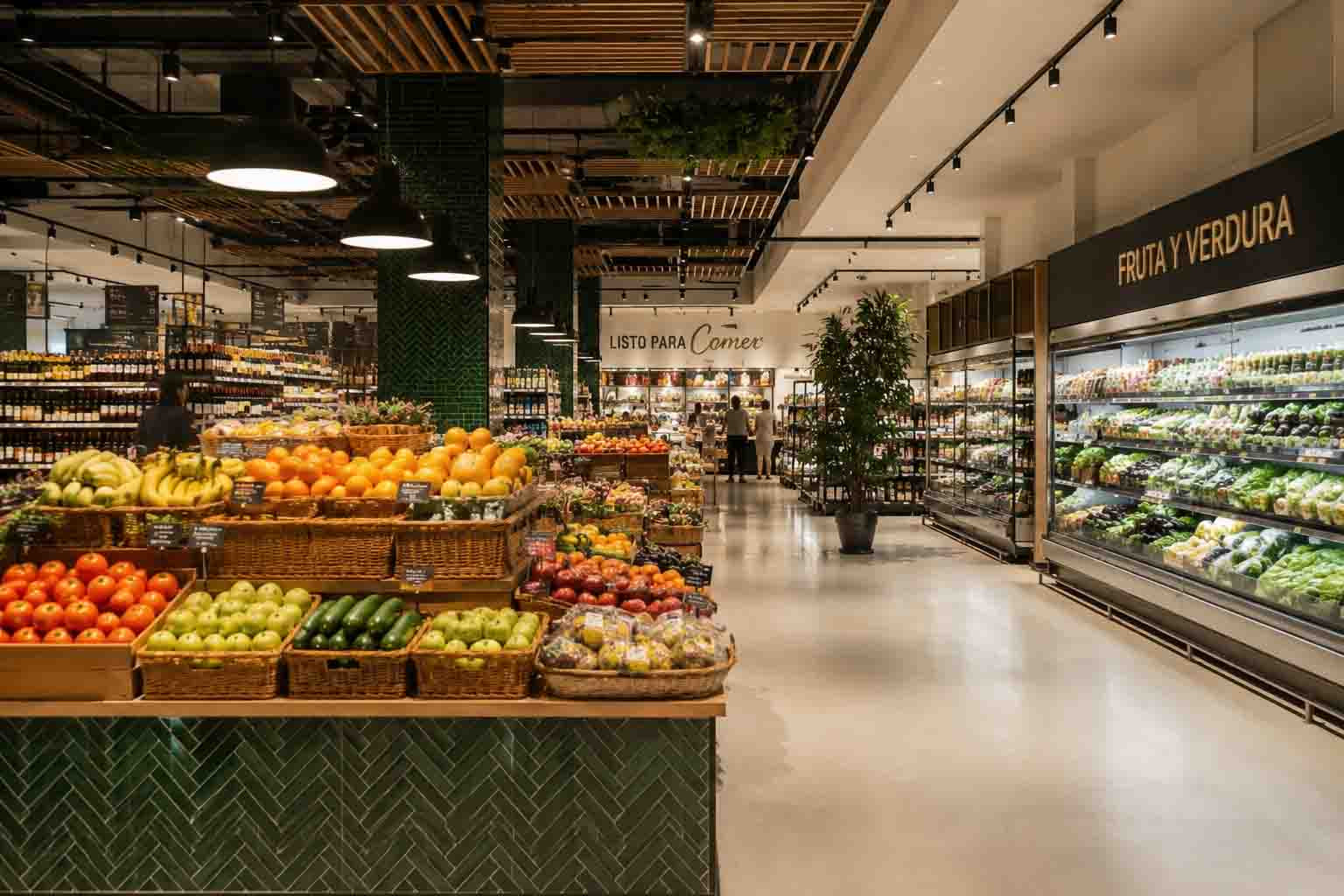
Top 10 Largest Grocery Chains in Spain: Brief Overview
Introduction
Spain is one of the most developed grocery retail markets in Europe, where national chains, international discounters, hypermarkets, and strong regional players operate side by side. This overview focuses on supermarket chains for which a verifiable reference profile can be compiled, including basic company information, store formats, geographic presence, assortment structure, private label brands, and online channels.
The selection includes chains with a significant presence in Spain and a sufficient volume of publicly available information, including official corporate websites, store locators, e-commerce sections, press materials, and corporate reports. This overview does not describe internal procurement processes and does not make unverified claims about suppliers. Its purpose is to provide readers with a compact map of the Spanish grocery retail market and demonstrate which companies shape the visible structure of the industry.
Selection Criteria
Two groups of factors were considered during the selection process: scale of presence and completeness of publicly available information. Priority was given to chains operating at the national level or holding strong regional positions, as well as companies with accessible official sources such as corporate pages, store locators, store format sections, online shops, mobile applications, reports, and press releases.
Additional consideration was given to the ability to verify key profile elements, including headquarters or country of origin, store formats, geographic coverage, main assortment categories, presence of private label brands, and digital services. Chains with limited public information were ranked lower than companies for which a more complete and verifiable reference profile could be compiled.
Mercadona
Headquarters and geography: Mercadona is a Spanish supermarket chain originating from the Valencian Community. The company operates corporate and logistics facilities in Albalat dels Sorells and Tavernes Blanques. The chain operates in Spain and Portugal, while its Spanish store locator demonstrates broad nationwide coverage.
Formats:
- Everyday grocery supermarkets
- Updated efficient store model
- Online sales through website and mobile application
- Logistics centers for online orders
Presence and coverage: According to Mercadona’s corporate materials for 2025–2026, the chain operated approximately 1,670 supermarkets across Spain and Portugal. The company is present in many Spanish regions, while its online business is supported through dedicated warehouse platforms for e-commerce orders.
Main product categories: fresh products, groceries, frozen foods, beverages, cosmetics, household cleaning products, pet supplies.
Private label brands (PL): Hacendado, Bosque Verde, Deliplus, Compy.
Online channels:
- Mercadona online grocery store
- Home delivery in available areas
- Mobile application for online shopping
- Nearest store locator
Distinctive features: Mercadona builds its model around a controlled assortment structure, recognizable private label brands, and a high density of stores across Spain. The company is widely perceived as an everyday shopping chain focused on groceries, household essentials, and core consumer categories.
Carrefour España
Headquarters and geography: Carrefour España is the Spanish division of the international Carrefour Group. The company operates in Spain through a multi-format retail model combining hypermarkets, supermarkets, convenience stores, the Supeco discount format, and online commerce.
Formats:
- Carrefour hypermarkets for large-scale shopping
- Carrefour Market supermarkets
- Carrefour Express convenience stores
- Supeco discount stores
- Carrefour online supermarket
Presence and coverage: In its press materials, Carrefour España describes itself as a company operating multiple store formats, private label brands, and digital sales channels. The company develops hypermarkets, Carrefour Market supermarkets, Carrefour Express stores, Supeco discount stores, and e-commerce operations throughout Spain.
Main product categories: fresh products, groceries, beverages, frozen foods, household cleaning products, personal care and hygiene products, baby products, pet supplies, parapharmacy products.
Private label brands (PL): Carrefour, Carrefour Bio, Calidad y Origen Carrefour, Carrefour No Gluten, Carrefour No Lactosa.
Online channels:
- Carrefour.es online supermarket
- Grocery home delivery
- Recogida Drive click-and-collect service
- Carrefour mobile applications
- Club Carrefour and ClubPASS loyalty programs
Distinctive features: Carrefour España operates as one of the most multi-format retail players in the Spanish market, ranging from large hypermarkets to compact urban stores and online services. The chain stands out for the breadth of its assortment, covering fresh products, private label brands, non-food categories, and loyalty programs.
Lidl España
Headquarters and geography: Lidl España is the Spanish subsidiary of the German Lidl Stiftung, part of Schwarz Group. The chain has operated in Spain for more than 30 years and develops a discount retail format supported by a broad network of stores and logistics platforms.
Formats:
- Discount supermarkets
- Stores with food and non-food categories
- Online shop for non-food categories
- Lidl Plus digital program
Presence and coverage: According to company data for 2025, Lidl España operated more than 700 stores and approximately 13–14 logistics platforms. The company also reports the regular opening of new stores and the development of energy-efficient retail locations.
Main product categories: fresh products, dairy products, meat and fish, bread and bakery products, groceries, beverages, household goods, clothing, garden products, and DIY products.
Private label brands (PL): Milbona, Deluxe, Cien, Formil.
Online channels:
- Lidl.es website with online offers and non-food categories
- Lidl Plus application with coupons
- Digital weekly catalogues
- Selected store information in the mobile application
Distinctive features: Lidl España positions itself around the discount retail model, private label brands, seasonal offers, and the Lidl Plus application. In addition to groceries, the chain actively develops non-food categories including household goods, clothing, DIY products, and garden products.
DIA
Headquarters and geography: DIA is a Spanish discount supermarket chain operating as Distribuidora Internacional de Alimentación, S.A. The group’s headquarters are located in Las Rozas, Community of Madrid. The chain operates across Spain and develops both company-owned and franchised stores.
Formats:
- Everyday discount supermarkets
- Convenience stores
- Franchised stores
- Online supermarket and grocery delivery
Presence and coverage: By the end of 2024, DIA operated more than 2,300 stores in Spain, including company-owned and franchised locations. The company is present in major cities, residential districts, and suburban areas, focusing on convenience store formats and everyday shopping.
Main product categories: fresh products, dairy products, meat and poultry, groceries, beverages, frozen foods, household goods, and household cleaning products.
Private label brands (PL): DIA, Al Punto, Delicious, Bonté.
Online channels:
- Online grocery ordering through dia.es
- Grocery home delivery
- DIA mobile application
- Personalized digital coupons and promotions
- Club DIA loyalty program
Distinctive features: DIA remains one of Spain’s most visible grocery discount chains with a strong presence in urban areas. The company focuses on convenience store formats, a combination of private label and branded products, and regular price promotions aimed at everyday shopping.
Eroski
Headquarters and geography: Eroski is a Spanish cooperative retail group that is part of Mondragón Corporación Cooperativa. The company’s headquarters are located in Elorrio, Basque Country. The chain is especially prominent in northern Spain and several autonomous communities.
Formats:
- Urban-format Eroski supermarkets
- Eroski hypermarkets
- Convenience stores and franchising formats
- Online supermarket with delivery
- Regional fresh product formats
Presence and coverage: Eroski positions itself as one of the largest cooperative retailers in Spain and a significant player in the European grocery retail market. The chain is particularly strong in the Basque Country, Galicia, Navarre, Catalonia, and the Balearic Islands.
Main product categories: fresh products, local products, groceries, beverages, frozen foods, household goods, organic products, ready-to-eat meals.
Private label brands (PL): EROSKI, EROSKI basic, Seleqtia, Natur.
Online channels:
- Eroski online supermarket
- Grocery home delivery
- EROSKI Club digital card
- Personalized offers and promotions
- Online catalogues and mobile services
Distinctive features: Eroski combines a cooperative management model, a strong regional presence, and a significant focus on local producers. The company actively promotes sustainable consumption, local products, and loyalty programs while maintaining a multi-format retail structure.
Alcampo
Headquarters and geography: Alcampo is a Spanish hypermarket and supermarket chain owned by Auchan Retail Group. The first Alcampo hypermarket in Spain was opened in Utebo, Zaragoza Province. The company develops large-format stores, supermarkets, and e-commerce operations.
Formats:
- Alcampo hypermarkets
- Urban-format supermarkets
- Everyday grocery stores
- Online hypermarket and delivery
- Click-and-collect pickup points
Presence and coverage: Alcampo operates across many autonomous communities in Spain and remains one of the country’s largest hypermarket brands. In recent years, the chain has strengthened its compact store formats while expanding online sales alongside its traditional large-format retail operations.
Main product categories: fresh products, groceries, beverages, household goods, home appliances, cosmetics, pet supplies, electronics.
Private label brands (PL): Alcampo, Auchan, Cosmia.
Online channels:
- Alcampo.es online store
- Delivery of grocery and non-food products
- Click & Collect order pickup
- Alcampo mobile application
- Digital catalogues and promotions
Distinctive features: Alcampo continues to rely on large-format retail, where grocery assortments are combined with household, seasonal, and non-food categories. The chain combines mass-market assortments, Auchan private label brands, and large retail spaces with the gradual expansion of compact formats and online sales.
Consum
Headquarters and geography: Consum is a Spanish cooperative supermarket chain headquartered in Silla, Valencia Province. The company is especially prominent in eastern Spain and actively develops stores across the Valencian Community, Catalonia, Murcia, Andalusia, and Castilla–La Mancha.
Formats:
- Urban-format Consum supermarkets
- Charter convenience stores
- Cooperative store management model
- Online grocery ordering in selected regions
Presence and coverage: Consum is one of the largest cooperative grocery retail chains in Spain. The company operates its own supermarkets and the Charter franchise network, maintaining particularly strong positions in the Mediterranean regions of the country.
Main product categories: fresh products, fruits and vegetables, meat and fish, groceries, beverages, organic products, household cleaning products, household goods.
Private label brands (PL): Consum, Consum ECO, Kyrey, Carezza.
Online channels:
- Consum online supermarket
- Grocery home delivery
- Consum mobile application
- Mundo Consum digital card
- Personalized discounts and coupons
Distinctive features: Consum relies on a cooperative business model, a well-developed network in eastern Spain, and a strong reputation for regular fresh grocery shopping. The chain actively promotes loyalty programs, local products, and everyday shopping services while maintaining stable positions across eastern Spain.
ALDI España
Headquarters and geography: ALDI España is the Spanish division of the German ALDI Nord Group. The company’s central office is located in Sant Cugat del Vallès, Barcelona Province. The chain is actively expanding across various autonomous communities in Spain and develops a discount format focused on everyday shopping.
Formats:
- Everyday discount supermarkets
- Compact urban supermarkets
- Limited-assortment stores
- Retail format with a high share of private label brands
Presence and coverage: As of the end of 2025, ALDI España operated approximately 500 supermarkets and continued active expansion across the country. The company is strengthening its presence in Catalonia, Andalusia, the Valencian Community, Madrid, and the Mediterranean coast.
Main product categories: fresh products, dairy products, groceries, beverages, frozen foods, household goods, cosmetics, seasonal products.
Private label brands (PL): GutBio, Milsani, Special de ALDI, Cucina Nobile, Biocura.
Online channels:
- ALDI España website with digital catalogues
- ALDI España mobile application
- Nearest store locator
- Online viewing of promotions and seasonal offers
Distinctive features: ALDI España operates through a classic discount retail model with a high share of private label brands and regular seasonal offers. The chain competes through a simplified assortment structure, low prices, and active expansion across different regions of Spain.
El Corte Inglés Supermercado / Hipercor
Headquarters and geography: El Corte Inglés is one of Spain’s largest retail groups, headquartered in Madrid. Its grocery retail division includes Supermercado El Corte Inglés supermarkets and Hipercor hypermarkets, which are present in major cities and shopping centers across the country.
Formats:
- Hipercor hypermarkets
- El Corte Inglés supermarkets
- Gastronomy spaces and fresh product areas
- Online supermarket and delivery
- Stores located within shopping centers
Presence and coverage: The grocery retail division of El Corte Inglés operates as part of a large multi-format retail group. Hipercor and the chain’s supermarkets are especially visible in Madrid, Barcelona, Valencia, Seville, and other major Spanish cities.
Main product categories: fresh products, delicatessen products, groceries, beverages, ready-to-eat meals, household goods, cosmetics, imported products.
Private label brands (PL): El Corte Inglés, Aliada, El Corte Inglés Selection.
Online channels:
- El Corte Inglés online supermarket
- Grocery home delivery
- Click & Car and order pickup services
- El Corte Inglés mobile application
- Loyalty program and digital promotions
Distinctive features: Supermercado El Corte Inglés and Hipercor combine grocery retail with the department store retail model. The chain focuses on broad assortments, premium categories, gastronomy concepts, and the integration of grocery retail with the group’s other business divisions.
Covirán
Headquarters and geography: Covirán is a Spanish cooperative grocery retail chain headquartered in Granada. The company unites independent retailers and partner stores, while maintaining its main presence in Spain and Portugal.
Formats:
- Convenience supermarkets
- Independent partner stores
- Cooperative model for partners
- Neighborhood grocery stores
Presence and coverage: Covirán operates through a broad network of partner stores and cooperative members. The chain is present in Spain and Portugal, and its model is based on supporting independent grocery retailers under a unified cooperative structure.
Main product categories: fresh products, groceries, beverages, dairy products, household cleaning products, everyday consumer goods, frozen foods.
Private label brands (PL): Covirán, Economical by Covirán, Covirán Selección.
Online channels:
- Covirán corporate website
- Digital catalogues and promotions
- Nearest store locator
- Information for cooperative members
Distinctive features: Covirán develops as a cooperative network of independent grocery stores and focuses on convenience store formats. The chain is oriented toward local neighborhood stores and supporting small retail businesses through a unified purchasing and marketing structure.
FAQ
Which supermarket chains are considered the largest in Spain?
The largest grocery retail chains in Spain generally include Mercadona, Carrefour España, Lidl España, DIA, Eroski, Alcampo, and ALDI España. These companies operate across many autonomous communities and work through different retail formats, including supermarkets, hypermarkets, discount stores, and convenience stores. Some chains have nationwide coverage, while others are especially strong in specific regions, such as Eroski in northern Spain or Consum in eastern Spain.
Which Spanish supermarket chains develop private label brands?
Private label brands are actively developed by nearly all major supermarket chains in Spain. Mercadona promotes Hacendado, Deliplus, and Bosque Verde, Carrefour España develops Carrefour Bio and Calidad y Origen, Eroski operates EROSKI basic and Seleqtia, while DIA develops the DIA and Al Punto product lines. For discount retailers such as Lidl España and ALDI España, private label brands are a core part of their assortment structure and price positioning.
Which supermarkets in Spain offer grocery delivery?
Online grocery delivery is offered by Mercadona, Carrefour España, DIA, Eroski, Consum, Alcampo, and El Corte Inglés Supermercado / Hipercor. Most major chains develop their own websites, mobile applications, and home delivery services. Some companies also provide click-and-collect services and dedicated pickup points.
What is the difference between discount stores and hypermarkets in Spain?
Spanish discount retailers, including Lidl España, ALDI España, and part of the DIA store network, typically operate with more compact assortments, a high share of private label brands, and a focus on low prices. Hypermarkets such as Alcampo or Hipercor offer a significantly broader assortment, including groceries, home appliances, household goods, clothing, and seasonal categories. Hypermarkets are also more commonly located in large shopping centers or on the outskirts of cities.
Which supermarket chains have the broadest regional presence in Spain?
Mercadona, Carrefour España, Lidl España, and DIA have some of the broadest nationwide coverage in Spain. These chains operate across many autonomous communities and actively develop both large-format and compact store formats. At the same time, Spain maintains strong regional retail players, including Eroski in the north and Consum in Mediterranean regions.
Where can official information about Spanish grocery retail chains be found?
Most official information about supermarket chains in Spain is published on the companies’ corporate websites. The most useful sections typically include “About Us,” “Store Locator,” “Sustainability,” “Investor Relations,” “Online Supermarket,” and “Corporate News.” These sources can be used to verify store formats, geographic coverage, private label brands, digital services, and general corporate information.
Conclusion
The Spanish grocery retail market combines international discount retailers, large national chains, and strong regional operators. The market includes hypermarkets, convenience supermarkets, cooperative retail networks, and digital grocery delivery services operating alongside one another. For most leading companies, official corporate sources are available, making it possible to compile fairly detailed reference profiles ranging from geographic presence and store formats to private label brands and online channels.
The growing importance of private label brands, loyalty programs, and online sales is especially noticeable, as these factors are becoming an increasingly important part of competition between retail chains. At the same time, the Spanish market maintains strong regional characteristics: some companies are particularly dominant in specific autonomous communities, making the country’s grocery retail structure more diverse compared to many other European markets.
The AllFoods.Market team invited representatives of the grocery retail industry to explore the platform’s capabilities for supplier discovery and operational collaboration within the system.
Would you like to present your products to buyers from major supermarket chains in Spain and other international markets? Join AllFoods.Market.
Latest blog posts
-
Top 10 Supermarket Chains in Austria: A Brief Overview
Austria’s grocery retail market brings together national chains, international groups, discounter...
-
Top 10 Supermarket Chains in Belgium: A Brief Overview
Belgium’s grocery retail sector brings together national chains, international groups, discounter...
-
Olive Oil Producers in Spain for B2B Sourcing
Spain's olive oil sector combines cooperative mills, industrial processors, refiners, bottlers, a...
-
Top 10 Largest Grocery Chains in Italy
Italy’s grocery market is divided among cooperative groups, national supermarket brands, internat...
-
Top 10 Largest Grocery Chains in Sweden: A Brief Overview
An overview of Sweden's largest grocery retail chains, including store formats, geographic covera...


Categories
- Reviews of products and manufacturers
- Allfoods Market System Features
- Market Insights
- Food Technologies
Latest posts in partners' blogs
-
Uzbekistan Food Exports and Key Markets
Uzbekistan’s food exports are expanding well beyond fresh produce. Fruit, vegetables, flour, mung...
-
Kazakhstan Food and Agricultural Exports
Kazakhstan’s export offer extends well beyond wheat and other grains. International buyers can al...
-
Alpine Beef Ribeye: The Pinnacle of Flavor and Excellence for Your HoReCa and Retail Business
The Perfect Steak Starts with a Name: Alpine
-
Uganda Agricultural Exports and Key Products for B2B Sourcing
Uganda’s agricultural export profile is dominated by coffee, but the commercial picture is broade...
-
Food Exports from Morocco
Morocco’s food export profile extends well beyond citrus and olive oil. Fresh tomatoes, berries, ...